News

City of Bartlesville
Posted: May 28, 2026 9:27 AMUpdated: May 28, 2026 9:29 AM
Bartlesville Museum Dedicates Plaque Honoring Tulsa Race Massacre Survivor

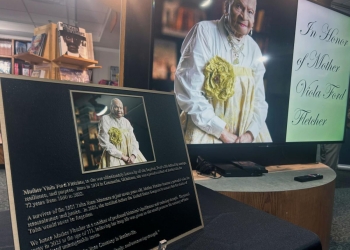
The Bartlesville Area History Museum on Tuesday unveiled a commemorative plaque honoring the late Viola Ford Fletcher, a former Bartlesville resident who was the oldest known survivor of the 1921 Tulsa Race Massacre at the time of her death.
Mayor Jim Curd delivered remarks during the brief ceremony, praising Fletcher’s resilience and lasting legacy.
“She led a remarkable life of resilience, dignity and unwavering strength,” Curd said. “We’re proud to call her our own, and she will always be remembered as a symbol of endurance with an unbreakable spirit. It’s a profound honor to recognize her legacy … it will help ensure that her story and her strength will continue to inspire generations to come.”
Fletcher, widely known as “Mother Fletcher,” was born May 10, 1914, in Comanche. She was 7 years old when she survived the Tulsa Race Massacre, one of the worst incidents of racial violence in U.S. history.
More than a century later, Fletcher continued publicly sharing her experiences, including testimony before Congress in 2021. She also published a memoir in 2023 titled “Don’t Let Them Bury My Story.”
“She was an extraordinary person who cared deeply about remembrance and justice,” Curd said.
Fletcher later raised her family in Bartlesville. She died Nov. 24 in Tulsa and is buried at White Rose Cemetery in Bartlesville. The Bartlesville City Council honored her in December with a mayoral proclamation recognizing her resilience and strength.
The newly installed plaque will serve as a permanent tribute inside the museum, commemorating Fletcher’s courage and enduring impact.
Raymond Doswell, executive director of Greenwood Rising Black Wall Street History Center, also spoke during the ceremony, providing historical context about Tulsa’s Greenwood District, the historic Black community where the massacre occurred.
“When you come to Greenwood Rising or you see these exhibits that are here, you get to see the rest of the story,” Doswell said.
Doswell said the history of the massacre was long overlooked, even by many Oklahomans.
“People didn’t know this part of the history. And, yes, it’s a difficult part of history to talk about,” he said. “But when you have resources who were living in plain sight, like Mrs. Fletcher and some of the other folk who were around for years, there are opportunities to learn that history.”
Doswell said Fletcher and her family helped preserve not only the story of the massacre itself, but also the story of her life afterward.
“Fortunately, she was able, through the family as well, to chronicle her story, her aspects of that, and not just what happened in the massacre, but, you know, what her life was like afterwards,” he said. “And those are important lessons to learn.”
Photo and video courtesy City of Bartlesville
« Back to News